

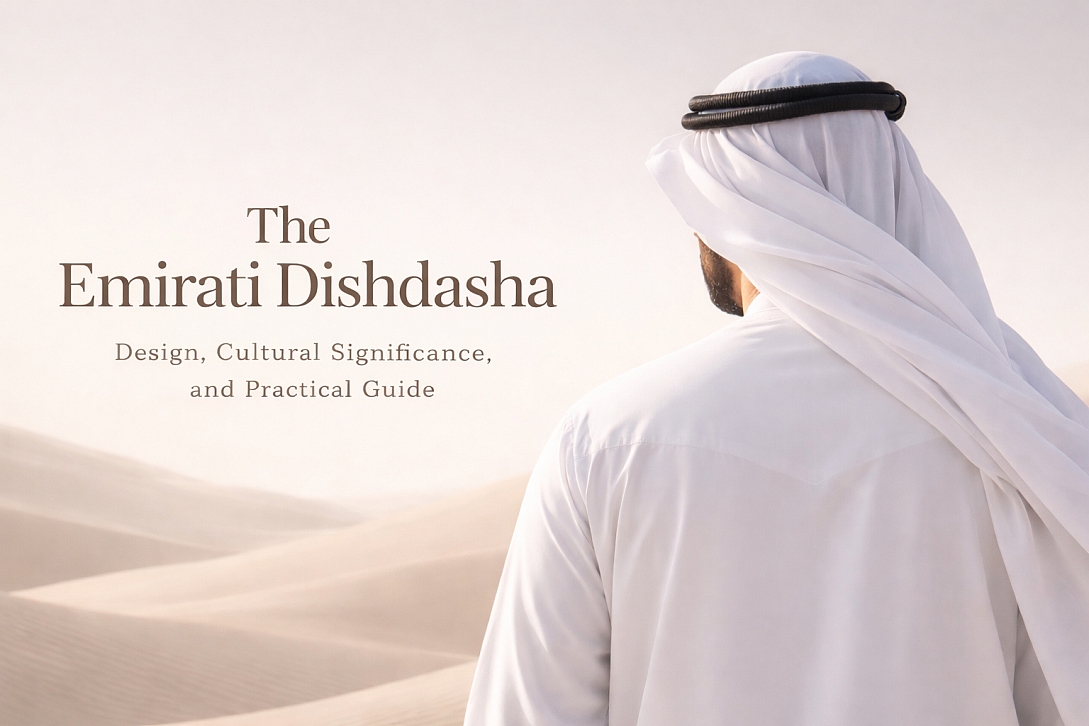
The Emirati Dishdasha: Design, Cultural Significance & How To Wear It
The ankle-length white robe worn by Emirati men is impossible to miss on the streets of Dubai. Known locally as a dishdasha, kandura, or sometimes thobe, it is the national dress of the United Arab Emirates. For visitors and new residents, it is more than a piece of clothing; it is a symbol of national pride, a practical garment designed for the climate, and a marker of cultural identity that has endured for centuries.
We will explain its components, its significance, and what you need to know about it as someone interested in the local culture.
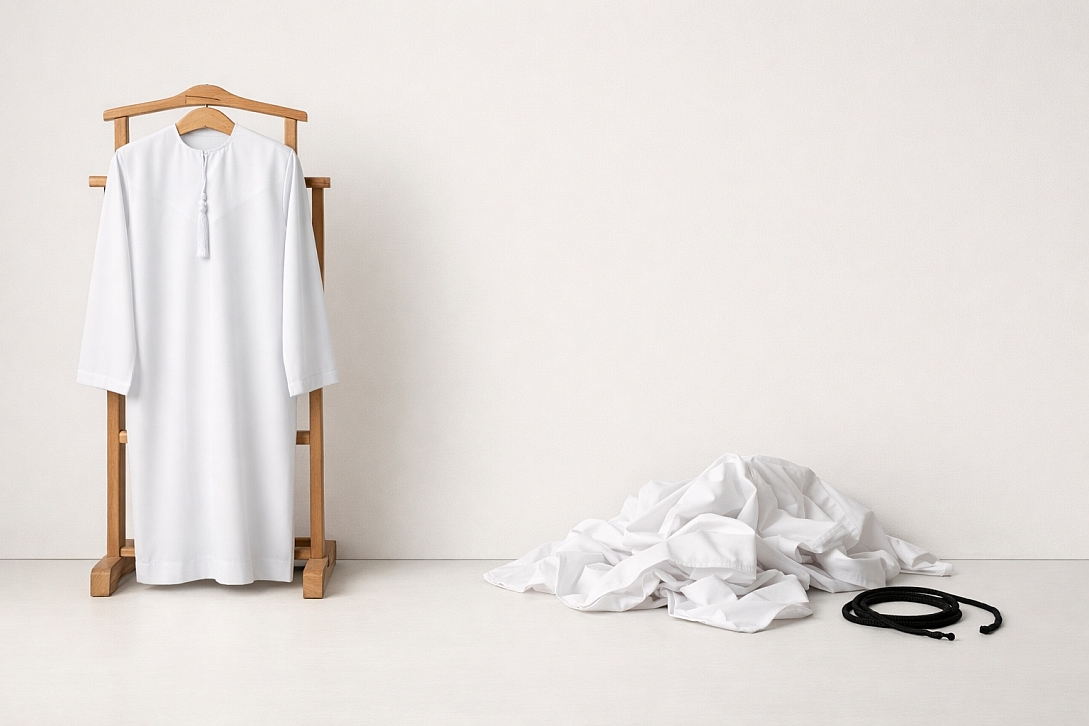
The essential details are straightforward: the dishdasha is a long, loose-fitting robe, traditionally made of white cotton and worn with a headscarf (ghutra) secured by a black cord (agal). Its design prioritizes comfort, modesty, and elegance.
- Garment: Dishdasha/Kandura - A long-sleeved, ankle-length robe.
- Fabric: Typically cotton, wool, or a blend, chosen for breathability.
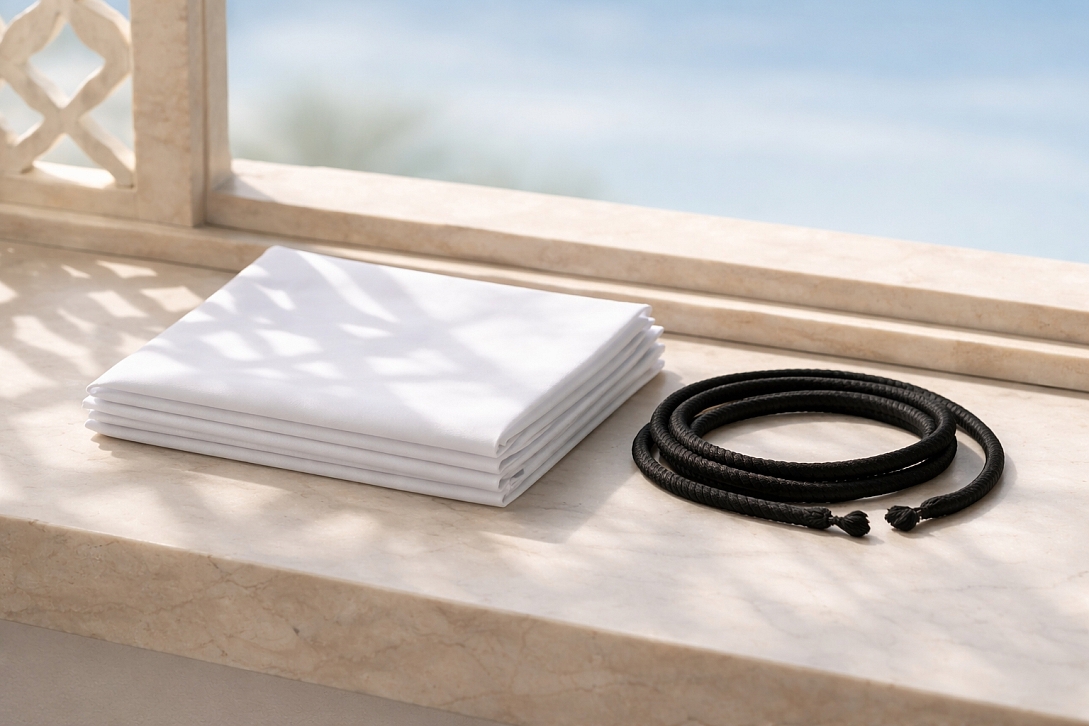
- Headwear: Ghutra (a scarf) held in place by an agal (a thick black cord), worn over a gahfiya (a small knitted cap).
- Occasional Additions: A bisht (a flowing cloak) for formal events, and a tarbousha (a tassel) sometimes attached to the collar.
The Core Design: Function and Form
The dishdasha’s design is a response to its environment and the values it represents. Its primary purpose is to provide comfort in the desert heat while upholding the cultural principles of modesty and dignity.
The loose fit is not a stylistic accident; it allows air to circulate around the body, providing a cooling effect. The choice of white or light colours for most of the year is equally practical, as they reflect sunlight rather than absorb it. In the winter months, it is common to see Emirati men wearing dishdashas in darker shades like brown, grey, or beige, made from heavier fabrics like wool for warmth.
Beyond practicality, the garment is a great equalizer. The simple, clean lines of the standard Emirati dishdasha, which is collarless and free of embroidery, project an image of understated elegance and humility. It minimizes outward displays of wealth in daily life, shifting the focus from the individual's material status to their character and conduct.
Regional Variations in Men's Traditional Dress
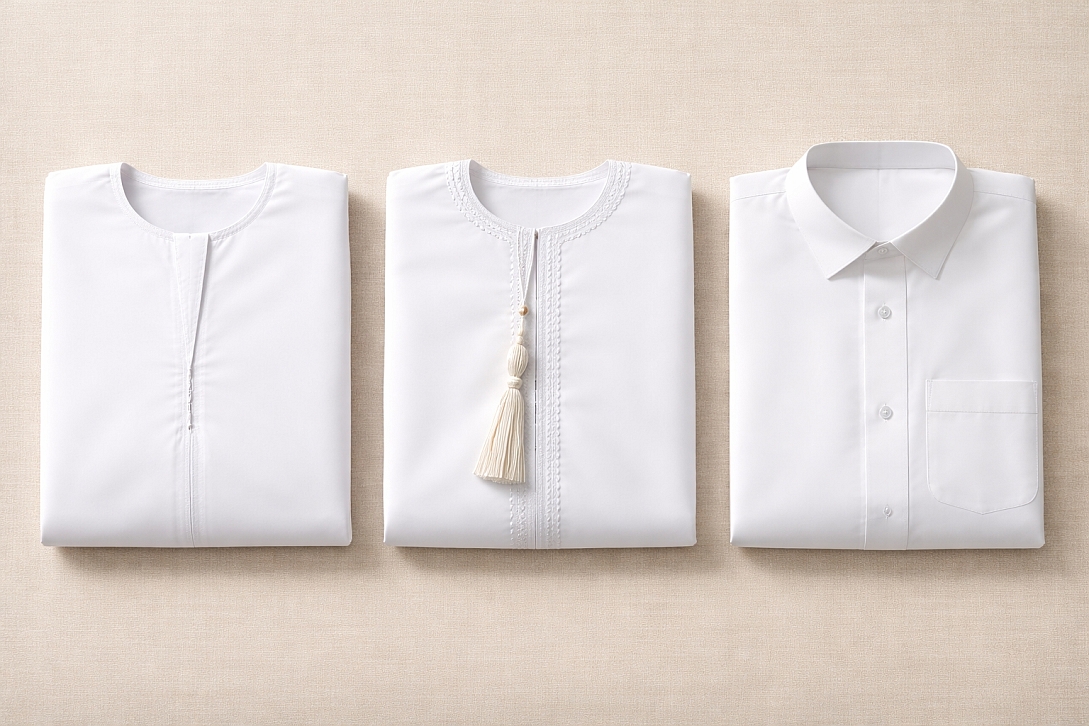
While the core elements are consistent, the style of the dishdasha and its accompanying items can vary across the Arabian Peninsula. Understanding these differences provides a deeper appreciation for the garment's cultural specificity.
| Feature | Emirati Style | Saudi Style (Thobe) | Omani Style (Dishdasha/Kandura) |
|---|---|---|---|
| Neckline | Collarless, round neck | Collared, similar to a dress shirt | Round neck with a distinctive tassel or cord (furakha) hanging from the chest |
| Cuffs | Simple, often buttonless | Buttoned cuffs | Often buttonless, similar to Emirati style |
| Embroidery | Minimal to none; simplicity is key | None on the body, but shirt-like details | Intricate embroidery around the neckline and tassel |
| Fit & Length | Flowing, falls just above the ankle | Can be more tailored, often similar length | Slightly shorter than the Emirati style |
| Headwear | Ghutra (white or red-check) with agal | Ghutra or shemagh with agal | Kuma (embroidered cap) or mussar (turban); no agal |
This comparison shows that while the dishdasha is a shared cultural touchstone, its specific form is a marker of national identity. For instance, the clean, collarless neckline is a point of pride for Emirati men, distinguishing them immediately from their neighbors.
Five Distinct Contexts for the Dishdasha
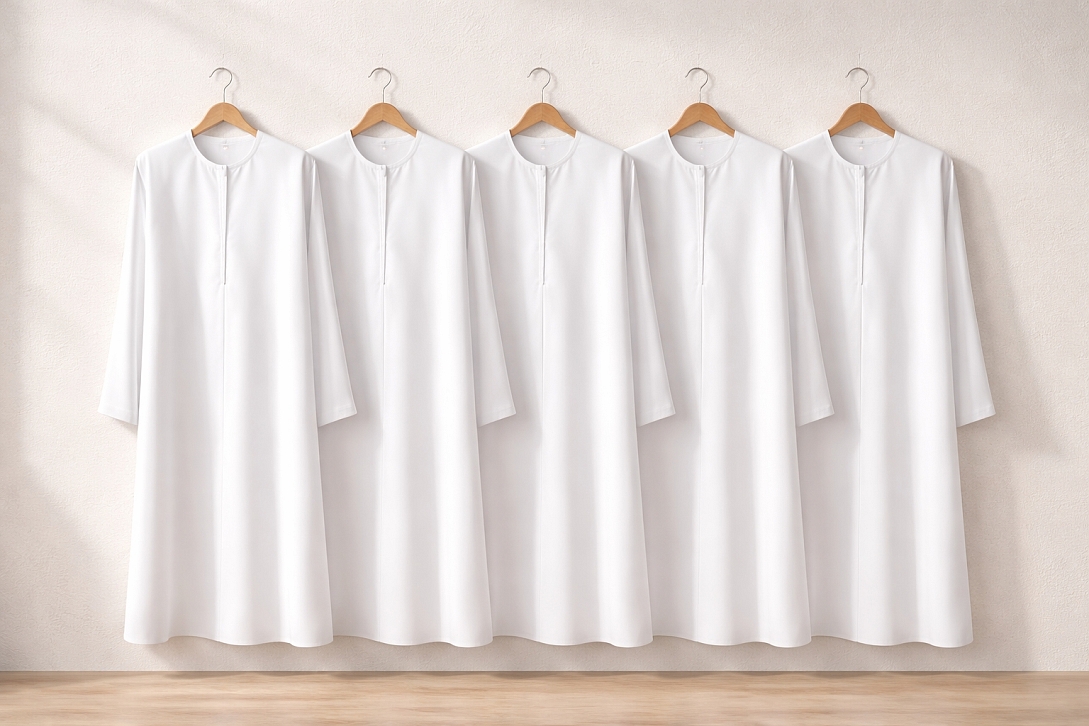
The dishdasha is not a static museum piece; it is a living garment worn in diverse situations, each with its own nuances.
1. Daily Life and the Workplace
For most Emirati men, the dishdasha is standard daily attire, whether in a government office, a private sector job, or a bank.
- Specific Constraints: The garment must be clean and crisply pressed. In professional settings, the quality of the fabric (often higher-thread-count cotton) and the precise fit are subtle indicators of personal care and status.
- Common Mistakes: An outsider might assume it is uncomfortable or restrictive, which is the opposite of the truth. Another mistake is to think it is worn only for special occasions. For Emiratis, it is their everyday clothing, as normal as a suit is for a Western businessman.
- Practical Advice: If you are a non-Emirati working in a local company, you are not expected to wear a dishdasha. However, understanding that your Emirati colleague’s attire is professional and practical, not ceremonial, is key to cultural fluency.
2. Attending a Formal Event: Weddings and Official Ceremonies
At formal occasions like weddings or National Day celebrations, the attire becomes more elaborate.
- Specific Constraints: This is where the bisht comes into play. A bisht is a flowing cloak, typically made of wool or silk, often trimmed with gold or silver. It is worn over the dishdasha to signify importance and prestige. The fabric of the dishdasha itself might also be a finer, more luxurious material.
- Common Mistakes: Wearing a bisht casually or to an inappropriate event would be a significant faux pas. It is reserved strictly for the most important occasions.
- Practical Advice: For non-Emirati guests invited to a formal event like a wedding, wearing a suit is perfectly acceptable. Showing respect by dressing smartly is the primary expectation.
3. The Friday Prayer at the Mosque
Friday is a holy day, and the midday prayer is a significant weekly gathering for men.
- Specific Constraints: Men will often wear their best dishdasha, frequently pure white, and take great care with their personal grooming, including wearing oud (a traditional perfume). The ghutra and agal are always worn.
- Common Mistakes: For a non-Muslim visitor to a mosque, the mistake is not about the dishdasha but about their own attire. They should dress very modestly, with long sleeves and long pants or skirts, and women must cover their hair.
- Practical Advice: Observing the care and intention Emirati men put into their appearance for prayer offers a profound insight into the importance of faith and community in daily life.
4. Modern Fashion and the "New" Kandura
Younger Emiratis are subtly evolving the dishdasha, blending tradition with contemporary style.
- Specific Constraints: The demand is for a more tailored fit—slimmer through the shoulders and body without compromising the garment's loose structure. Fabric choice has also evolved, with high-quality Japanese cotton becoming popular for its softness, durability, and elegant drape.
- Common Mistakes: Assuming the garment is static. Fashion is a part of Emirati culture too, and the dishdasha has naturally evolved while retaining its core identity.
- Practical Advice: If you are looking to purchase a high-quality dishdasha, whether for yourself or as a gift, seek out tailors or brands that specialize in these modern cuts and premium fabrics.
5. A Tourist Trying on a Dishdasha
Many visitors are curious and may want to try on a dishdasha for a photograph or cultural experience.
- Specific Constraints: Context is everything. Wearing one while visiting a heritage village or at a dedicated cultural event is seen as a sign of respect and appreciation. Wearing it solely for a nightclub photo or in a mocking manner is deeply offensive.
- Common Mistakes: Wearing it incorrectly. For instance, the agal is worn to hold the ghutra in place, not as a standalone fashion accessory. Also, wearing a bisht in a casual setting would be odd, as it is formal wear.
- Practical Advice: If you wish to try one, visit a traditional souk like the one in Deira. Many shopkeepers will happily help you wear it properly and explain the different parts. See it as an opportunity to learn, not just a photo opportunity.
Expert Nuances and Deeper Implications
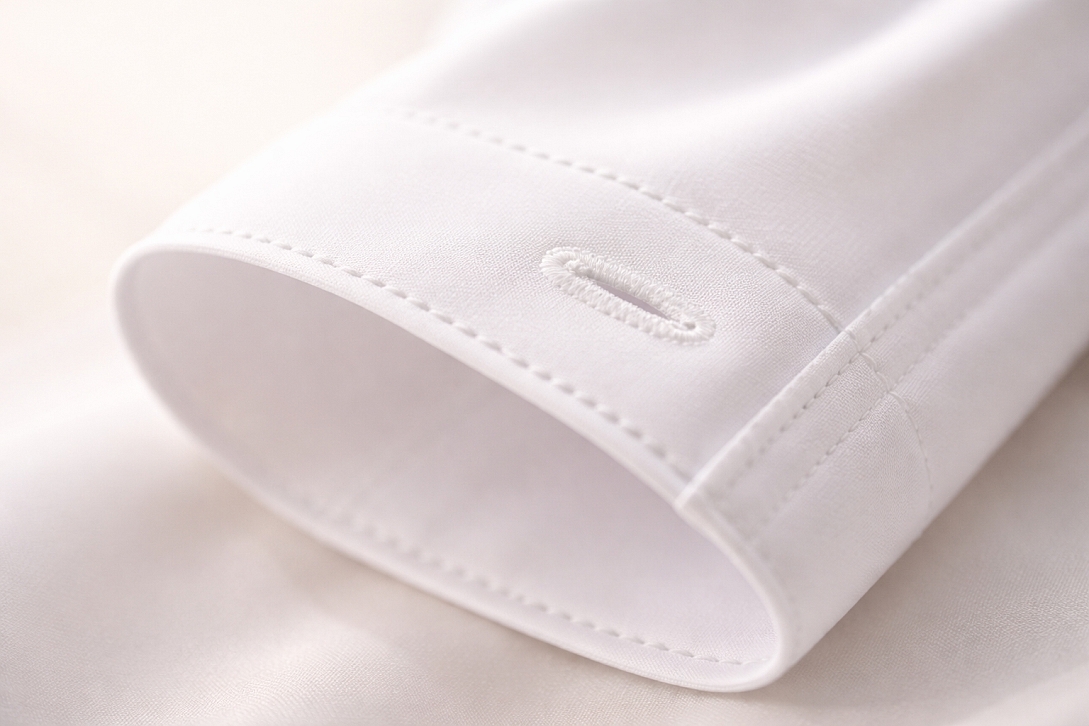
The dishdasha operates on levels far beyond mere fabric and thread. It is a powerful, silent communicator of identity and social standing.
The garment serves as a primary visual marker of citizenship in a country where expatriates make up a significant majority of the population. Wearing the dishdasha is an act of asserting national identity in everyday public spaces. The subtle differences in style—the cut of the collar, the drape of the fabric, the way the ghutra is folded—can even signal one's family background or region of origin within the UAE.
An Emirati can often identify another's tribe or city of origin just by observing these subtle stylistic choices. While the abaya for women has been studied as a symbol of power and resistance, the dishdasha similarly commands respect and signifies belonging, subtly shifting the social dynamic in favor of the national in any encounter.
Common Pitfalls and Misconceptions
Several myths persist about the dishdasha, particularly among tourists.
- Misconception 1: It's a costume. For Emiratis, it is standard, everyday clothing, equivalent to jeans and a t-shirt or a business suit. It is not worn for the benefit of tourists.
- Misconception 2: It's worn to oppress women. This is a false and culturally ignorant conflation. The men's dress and women's dress are separate traditions, both rooted in shared values of modesty and cultural identity. The abaya is a complex garment with its own rich history and significance, not a symbol of oppression but, for many, one of empowerment and faith.
- Misconception 3: All white robes are the same. As detailed in the comparison table, the style differences between countries are distinct and meaningful. Calling an Emirati dishdasha a "Saudi thobe" would be incorrect and might be seen as a lack of cultural awareness.
A Practical Guide: How to Show Respect and Appreciation

For the non-Emirati resident or visitor, you will likely never wear a dishdasha, but you will interact daily with men who do. Here is how to navigate this with cultural intelligence.
- Observe and Acknowledge: Simply notice the garment. Appreciating its cleanliness, elegance, and the dignity it conveys is a form of silent respect.
- Use the Correct Terminology: If you have the opportunity to discuss it, using the local term "dishdasha" or "kandura" instead of "robe" or "gown" demonstrates a genuine effort to understand the culture.
- Do Not Touch: As with any person, it is not appropriate to reach out and touch someone's clothing without their express permission.
- Dress Modestly Yourself: The most powerful way to show respect for the values the dishdasha represents is to mirror them in your own attire. By dressing modestly in public, you acknowledge and honor the local culture. This is the ultimate compliment you can pay.
- Context for Gifts: If you are considering buying a ghutra or agal as a gift for an Emirati friend, it is a thoughtful gesture. However, buying the dishdasha itself is highly personal, as fit and fabric preference are crucial. A gift certificate to a reputable tailor would be far more appropriate.
Addressing Intent-Driven Questions
Can a tourist buy a dishdasha in Dubai? Yes, easily. They are sold everywhere from large shopping mall stores to small shops in traditional souks like Naif Souk or the Textile Souk. For a higher quality, tailored experience, you can visit tailors in areas like Al Fahidi or Bur Dubai who specialize in making them.
Is it offensive if I, as a tourist, wear a dishdasha? Generally, no, as long as it is done with respect and in the right context. Wearing one while visiting a heritage site, a mosque, or a local market is seen as cultural appreciation. The key is intention. If you wear it respectfully, it will be received respectfully. If you wear it to a bar or club as a joke, it will be seen as mockery.
What is the difference between a ghutra, shemagh, and keffiyeh? These terms are often used interchangeably but have nuances. In the UAE, it is most commonly called a ghutra. The white ghutra is typically worn in the summer, while a red-checked one (often called a shemagh in other Gulf countries) is also worn, particularly in winter or for less formal occasions. Keffiyeh is a more general term for the scarf, but ghutra is the preferred term in the Emirates.
Why do Emirati men wear a black cord (agal) on their head? The agal has historical roots in Bedouin culture, where it was used by camel herders to tether the animals' legs. Over time, it evolved into a purely symbolic accessory used to hold the ghutra in place, becoming a key component of the national dress. It signifies tradition and is a marker of masculine identity.
LEAVE A COMMENT
Categories
Recent Posts








0.0739